












Informational partners

Client-Logo-3
Client-Logo-5
Client-Logo-6

Pay Transparency Readiness in One HR Platform

Meet the key EU Pay Transparency Directive requirements with new features in PeopleForce β€” structure salary ranges, analyze pay gaps, and document compensation decisions with confidence.

screen=#4

Join the growing list of companies who reached efficiency with PeopleForce

BMW Reply Novapay Paysera Ajax Systems Rakuten Solvd AVIS Nova Global Room8 Studio BMW Reply Novapay Paysera Ajax Systems Rakuten Solvd AVIS Nova Global Room8 Studio

PeopleForce supports all 7 key indicators defined in the EU Pay Transparency Directive,

helping HR teams prepare structured data for reporting.


Prepare for the Pay Transparency with the right HR infrastructure

It is not only about reporting pay gaps. It requires reliable HR data, consistent compensation visibility, and clear documentation behind pay decisions β€” all working together.

With PeopleForce:

Centralize compensation data and processes

Gain visibility into pay decisions
Build a structured foundation for transparency
 

All compensation data, processes, and analytics in one platform

Pay transparency requires consistent data across hiring, compensation, and internal policies β€” as well as clear visibility into how pay is distributed across the organization.

In one platform:

Manage roles, pay, and records together
Keep data consistent across processes
Analyze pay distribution with dashboards
 

Built for HR teams preparing for pay transparency

We develop our platform to support HR teams navigating the changes introduced by the EU Pay Transparency Directive.

How we support you:

Constantly check and align with evolving requirements
Work with labor law experts
Help structure data and processes
 

Support transparent pay conversations across the organization

Pay transparency impacts HR, managers, and employees β€” not just systems and reporting.

PeopleForce helps you:

Clarify how pay decisions are made
Support structured pay discussions
Build trust through transparency
ISO GDPR

PeopleForce tools to support pay

transparency readiness

PeopleForce combines existing HR functionality with new capabilities designed to help

organizations prepare for upcoming transparency requirements.

Job Ad Compliance Automation

Support transparent salary communication during hiring

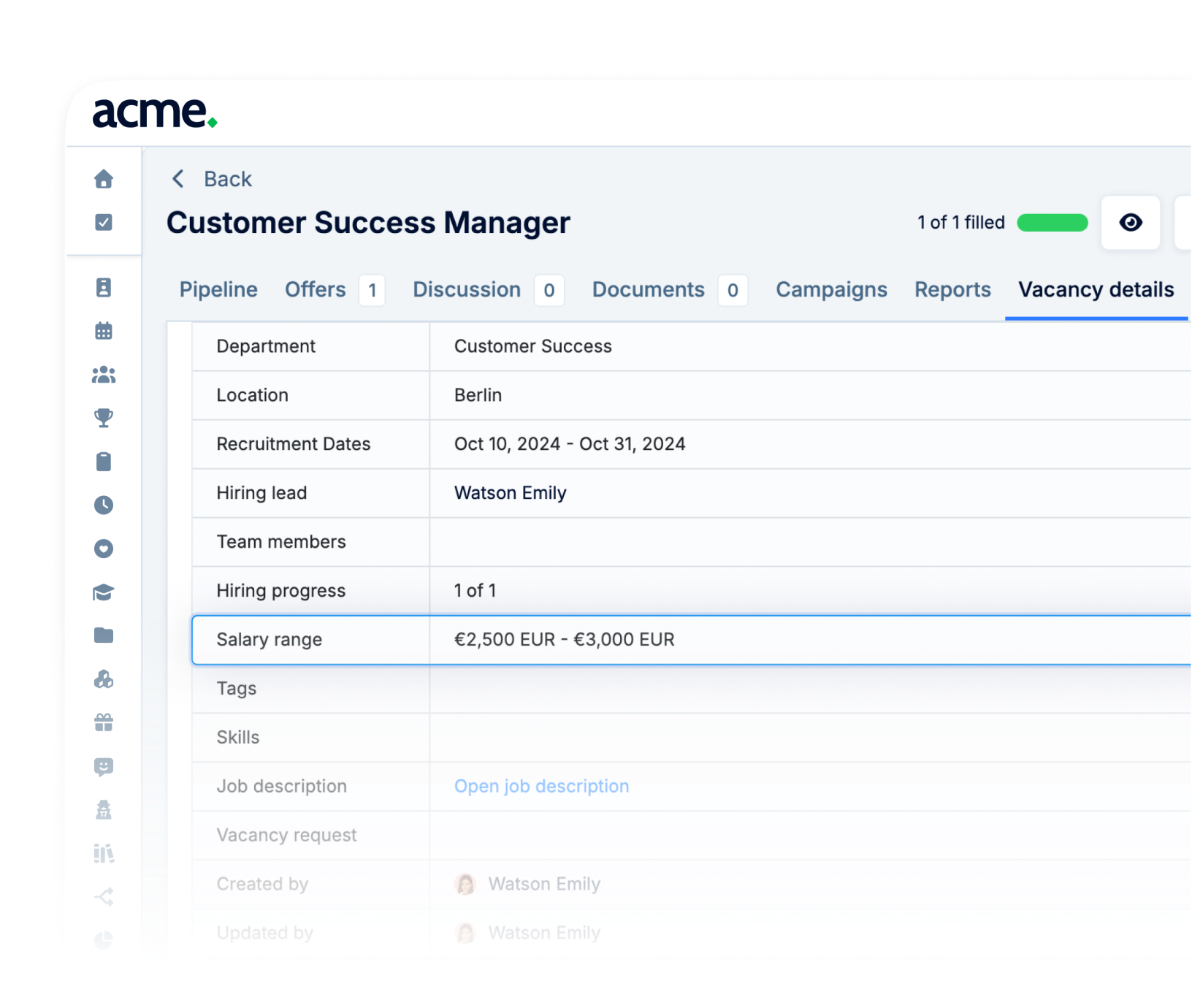
PeopleForce Recruit allows HR teams to include salary ranges directly in job postings on the career site, helping align recruitment processes with emerging transparency expectations. Pipeline automation workflows also support structured candidate communication throughout the hiring process.

Aligned with Articles 5 & 6 of the Directive to support salary ranges in job postings and transparent hiring practices.
Transparent Pay Framework

Create a structured foundation for transparent compensation

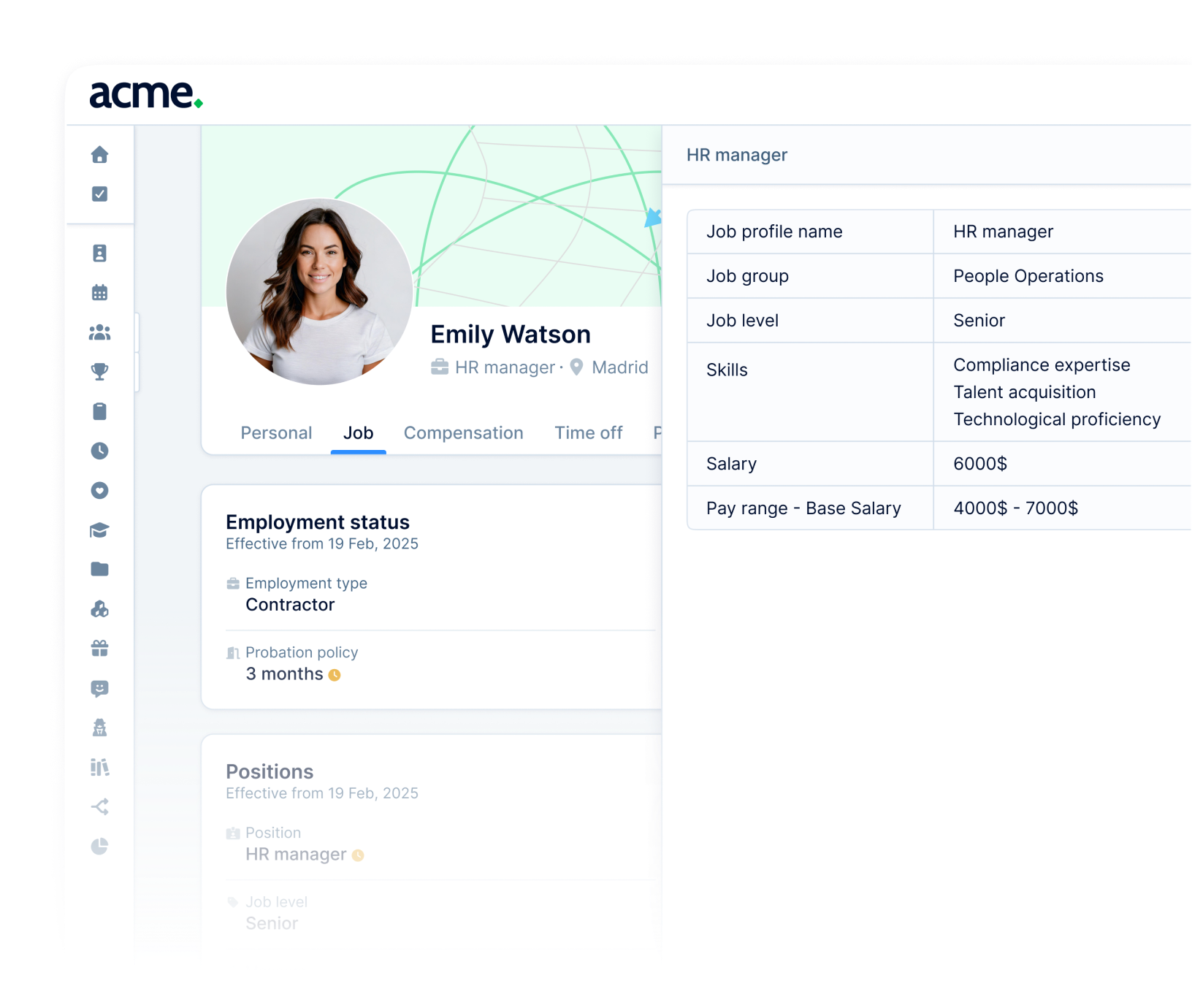
PeopleForce allows HR teams to build a job catalog with clearly defined roles, titles, descriptions, and skills, creating a consistent structure across the organization. Salary ranges can be assigned to these roles, helping establish a clear and consistent compensation framework across the company.

Aligned with Articles 4 & 6 to ensure consistent, objective, and gender-neutral pay structures.
Pay Gap Analytics & Reporting

See pay distribution and quickly identify potential pay gaps

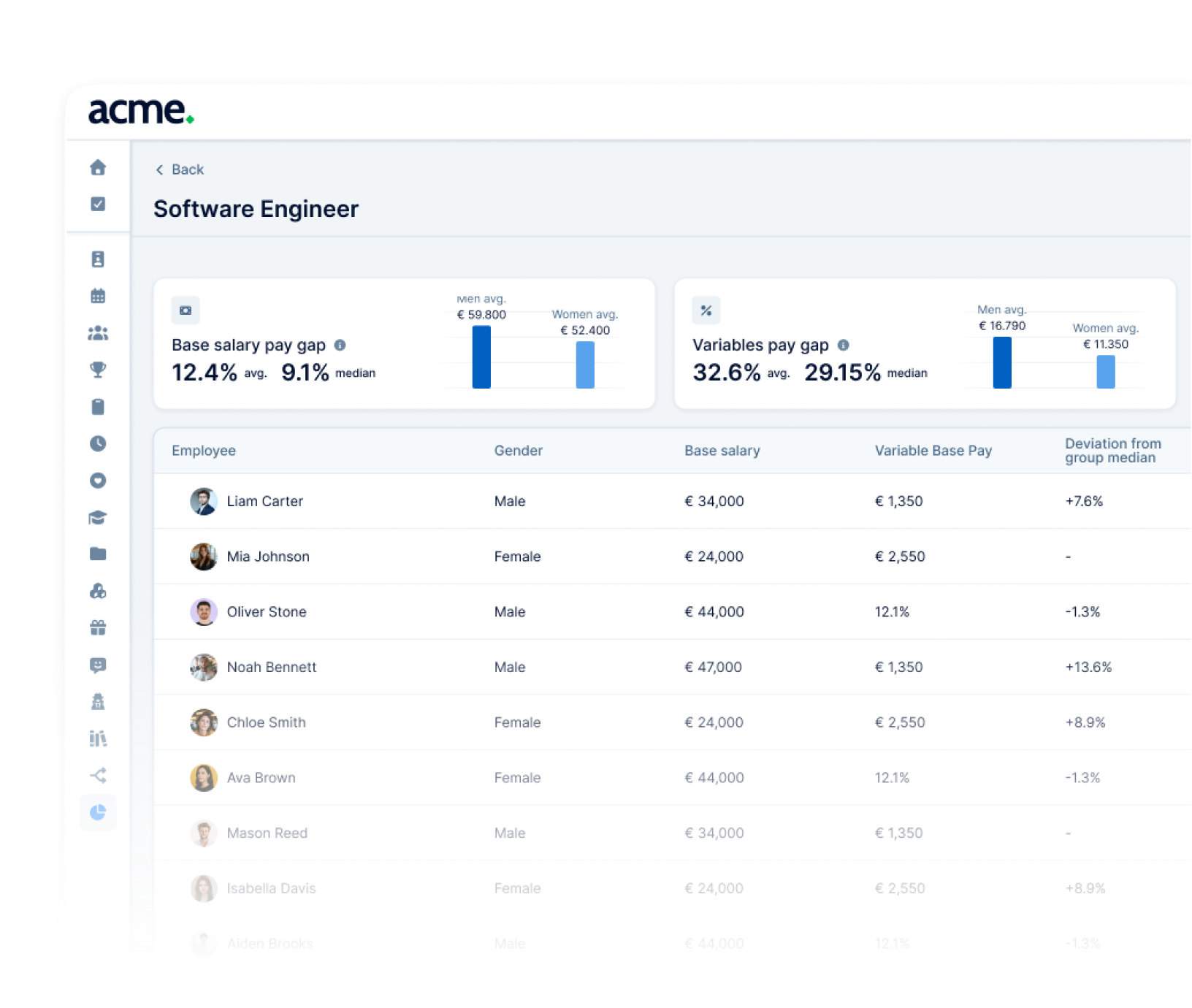
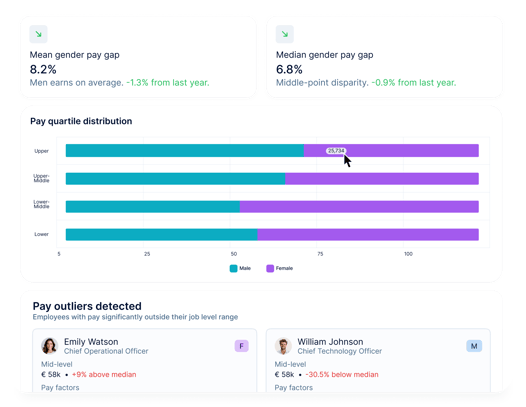
PeopleForce provides dedicated pay transparency dashboards that visualize salary data across roles, job levels, and gender. HR teams can quickly explore compensation differences and identify potential pay gaps. The dashboards support key gender pay gap indicators defined in the EU Pay Transparency Directive, helping prepare data for reporting.

Aligned with Articles 9 & 10 to help analyze and prepare gender pay gap data for reporting.
Audit-Ready Pay Documentation

Maintain clear documentation behind compensation decisions

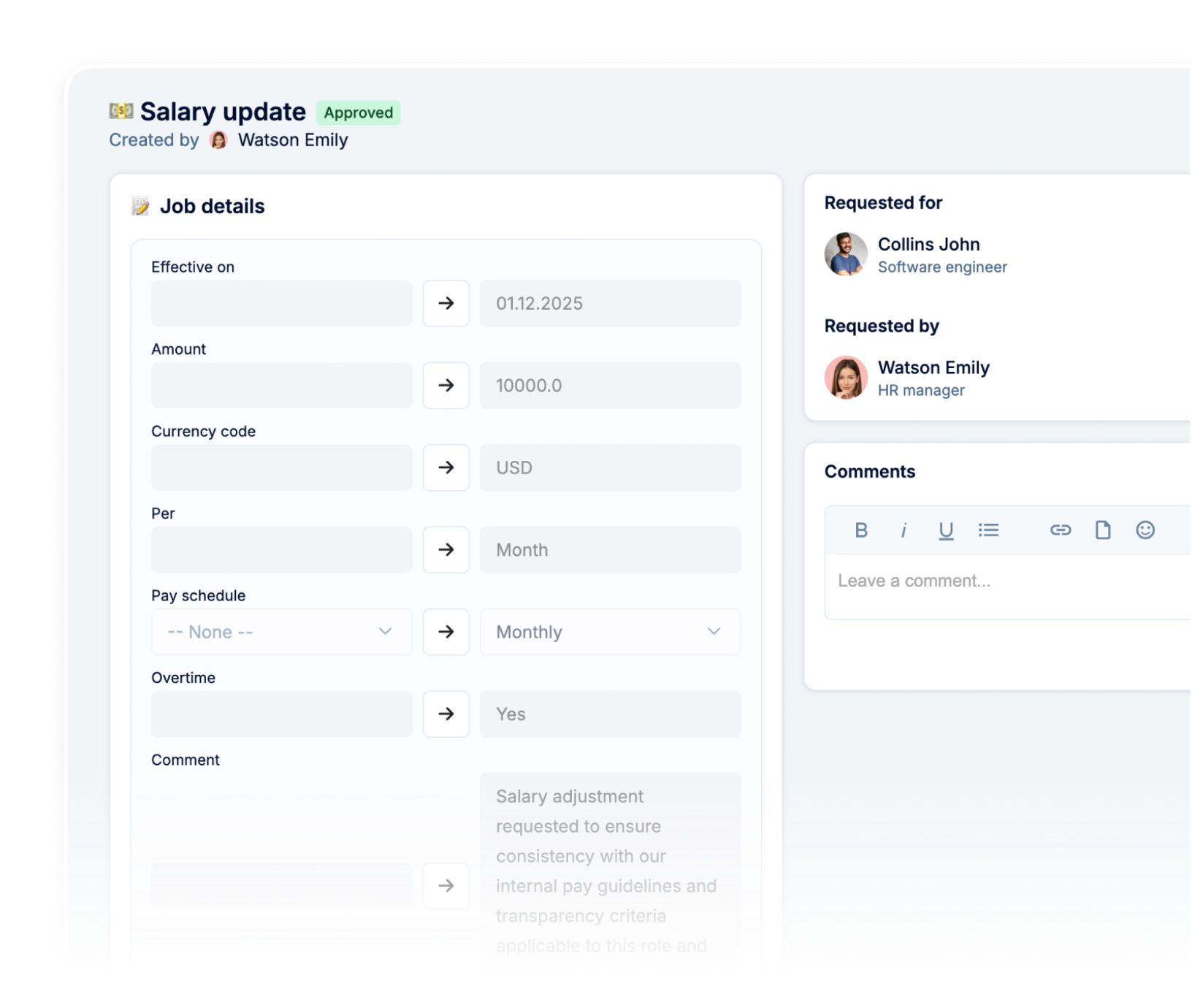
PeopleForce allows HR teams to record reasons behind salary changes, creating a transparent history of pay decisions. Compensation policies, salary frameworks and guidelines can be shared through the Knowledge Base, while templates and documentation are stored in one place for consistent and accessible records.

Aligned with Articles 6 & 12 to maintain clear records of pay decisions and changes.
Guided Pay Decisions

Standardize how compensation changes are requested and approved

PeopleForce helps HR teams structure compensation processes and set up approval workflows for salary updates, ensuring that pay changes follow clear internal policies and defined decision paths.

Aligned with Article 6 to provide employees with access to pay-setting criteria and policies.
Employee Pay Transparency Requests

Manage employee salary requests in a structured, trackable way

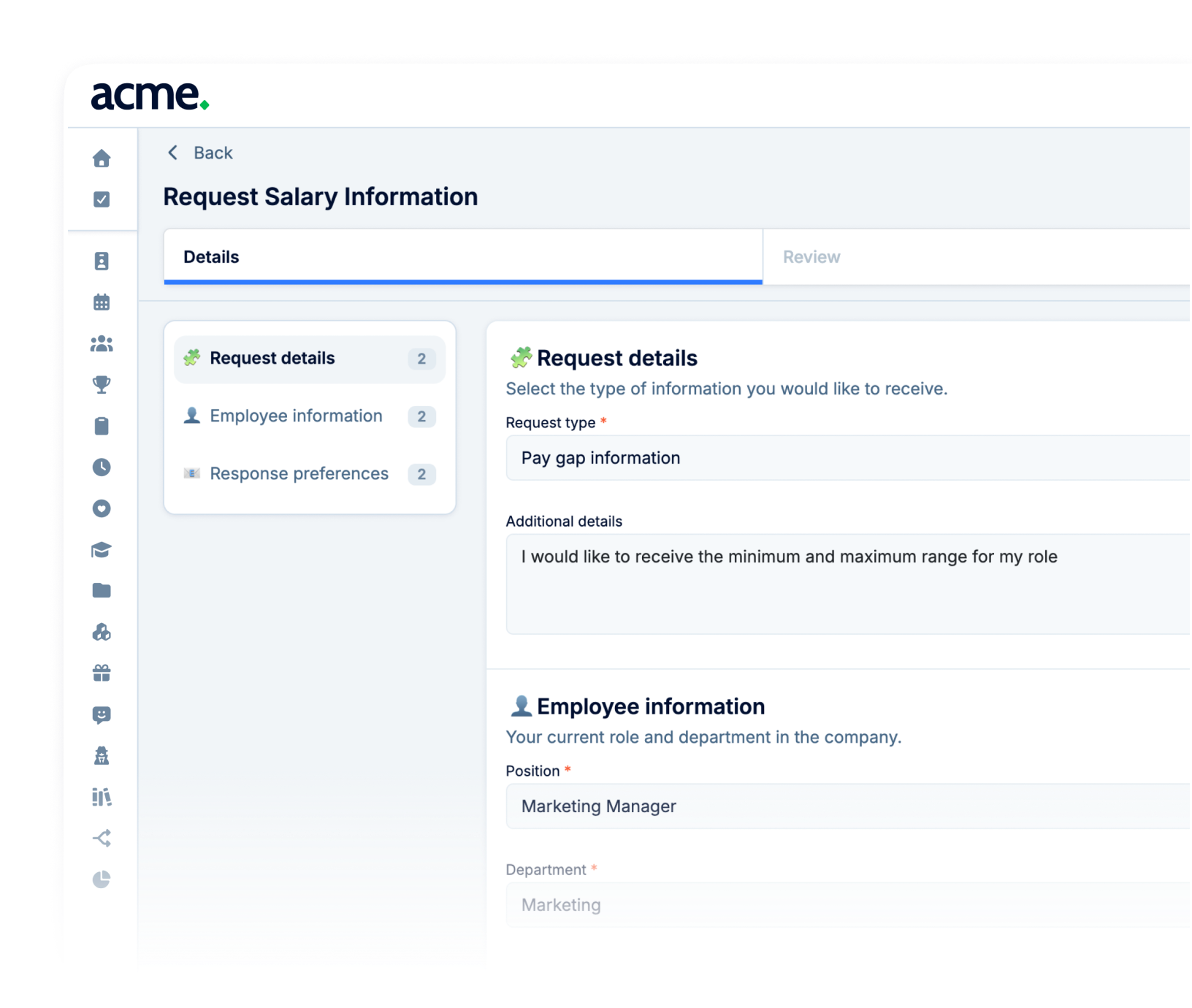
HR teams can create custom request forms within PeopleForce for salary-related inquiries β€” including compensation details, pay ranges, or pay gap questions. Requests are handled through structured workflows with approvals, comments, and clear ownership, ensuring everything stays centralized, transparent, and trackable.

Aligned with Article 7 to support employee rights to request pay information through structured, trackable workflows.
 
Coming Soon
Job Ad Compliance Automation
Transparent Pay Framework
Coming Soon
Pay Gap Analytics & Reporting
Audit-Ready Pay Documentation
Guided Pay Decisions
Employee Pay Transparency Requests
icon

Start preparing for pay transparency today.

Join the waitlist to access new features early, or speak with our HR expert to see what you can implement now.

Coming Soon
Job Ad Compliance Automation

Support transparent salary communication during hiring

PeopleForce Recruit allows HR teams to include salary ranges directly in job postings on the career site, helping align recruitment processes with emerging transparency expectations. Pipeline automation workflows also support structured candidate communication throughout the hiring process.

Aligned with Articles 5 & 6 of the Directive to support salary ranges in job postings and transparent hiring practices.
Transparent Pay Framework

Create a structured foundation for transparent compensation

PeopleForce allows HR teams to build a job catalog with clearly defined roles, titles, descriptions, and skills, creating a consistent structure across the organization. Salary ranges can be assigned to these roles, helping establish a clear and consistent compensation framework across the company.

Aligned with Articles 4 & 6 to ensure consistent, objective, and gender-neutral pay structures.
Coming Soon
Pay Gap Analytics & Reporting

See pay distribution and quickly identify potential pay gaps

PeopleForce provides dedicated pay transparency dashboards that visualize salary data across roles, job levels, and gender. HR teams can quickly explore compensation differences and identify potential pay gaps. The dashboards support key gender pay gap indicators defined in the EU Pay Transparency Directive, helping prepare data for reporting.

Use structured dashboards to review compensation data and prepare transparency reporting with more confidence.
Audit-Ready Pay Documentation

Maintain clear documentation behind compensation decisions

PeopleForce allows HR teams to record reasons behind salary changes, creating a transparent history of pay decisions. Compensation policies, salary frameworks and guidelines can be shared through the Knowledge Base, while templates and documentation are stored in one place for consistent and accessible records.

Keep salary decisions documented and accessible to support internal consistency and future audits.
Guided Pay Decisions

Standardize how compensation changes are requested and approved

PeopleForce helps HR teams structure compensation processes and set up approval workflows for salary updates, ensuring that pay changes follow clear internal policies and defined decision paths.

Route compensation updates through clear approval flows and make pay decisions more consistent across the organization.
Employee Pay Transparency Requests

Manage employee salary requests in a structured, trackable way

HR teams can create custom request forms within PeopleForce for salary-related inquiries β€” including compensation details, pay ranges, or pay gap questions. Requests are handled through structured workflows with approvals, comments, and clear ownership, ensuring everything stays centralized, transparent, and trackable.

Aligned with Article 7 to support employee rights to request pay information through structured, trackable workflows.
icon

Start preparing for pay transparency today.

Join the waitlist to access new features early, or speak with our HR expert to see what you can implement now.

How to Get Ready forPay
Transparency β€”
Step by Step

Pay transparency is not one action β€” it’s a structured process.
Here’s how HR teams approach it β€” and how PeopleForce supports each step.

Step #1

Define roles and structure your organization

Use PeopleForce to create a structured job catalog with roles, titles, and skills that supports consistent compensation decisions.
01

Define roles and structure your organization

Use PeopleForce to create a structured job catalog with roles, titles, and skills that supports consistent compensation decisions.

Step #2

Establish salary ranges

Manage salary ranges (pay bands) in PeopleForce to ensure pay decisions are aligned and explainable.

02

Establish salary ranges

Manage salary ranges (pay bands) in PeopleForce to ensure pay decisions are aligned and explainable.

Step #3

Document compensation decisions

Track salary changes, reasons and approval flows in PeopleForce to maintain a clear record of compensation decisions.

03

Document compensation decisions

Track salary changes, reasons and approval flows in PeopleForce to maintain a clear record of compensation decisions.

Step #4

Analyze pay distribution

Leverage PeopleForce dashboards to monitor pay distribution and explore potential pay gaps across the organization.

04

Analyze pay distribution

Leverage PeopleForce dashboards to monitor pay distribution and explore potential pay gaps across the organization.

Step #5

Communicate pay policies

Share compensation frameworks and policies through PeopleForce Knowledge Base, documents and workflows to support transparent communication across teams.

05

Communicate pay policies

Share compensation frameworks and policies through PeopleForce Knowledge Base, documents and workflows to support transparent communication across teams.

Check your pay transparency readiness

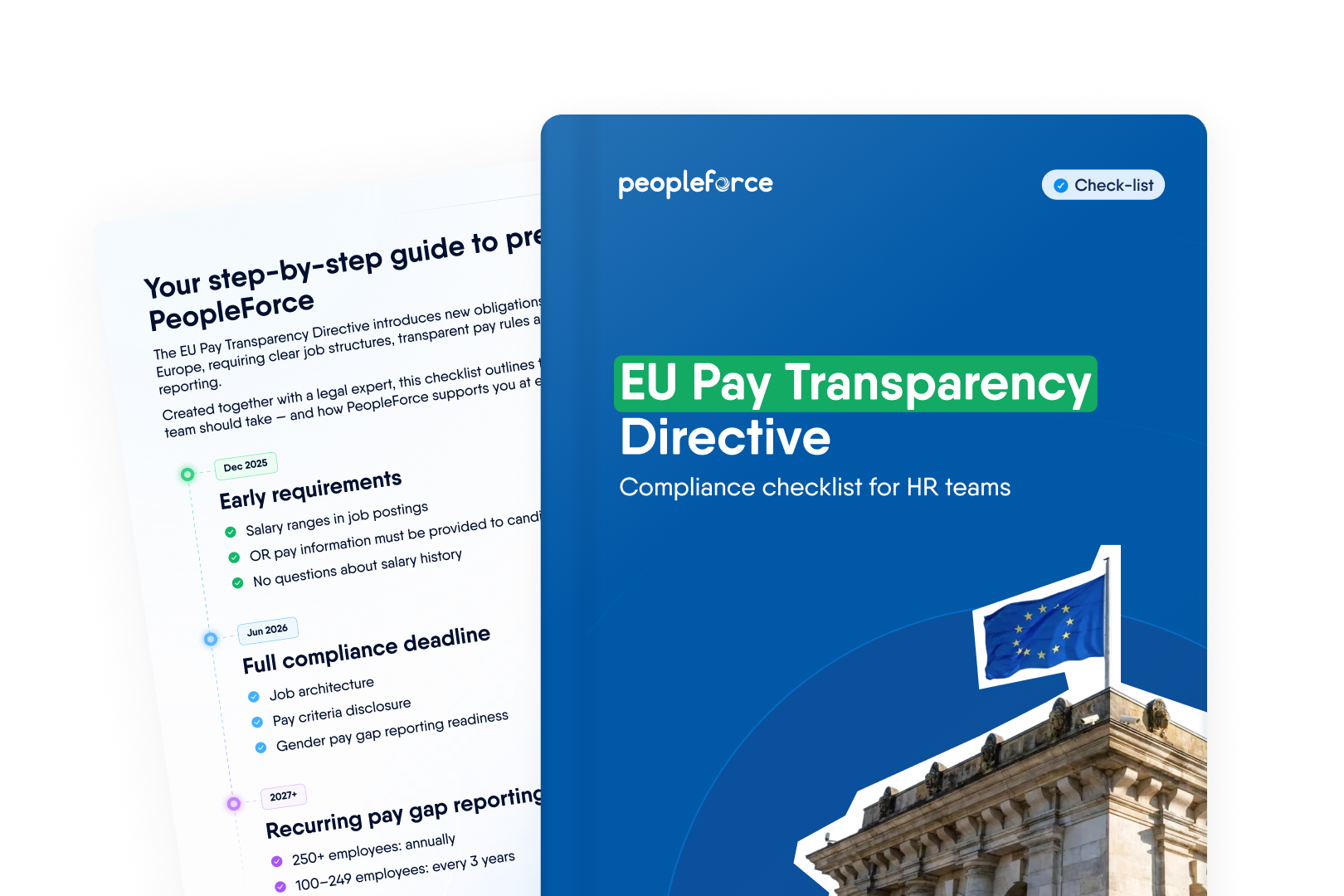
Get a practical HR checklist with key steps, deadlines, and a quick self-assessment to understand how prepared you are.

Download the compliance checklist

Free early access to upcoming
pay transparency features

PeopleForce is actively developing additional capabilities to support organizations preparing for transparency requirements.

Join the early access list to:

Receive updates on upcoming features.
Get early access to explore and test new pay transparency tools in your own setup.
Learn how HR teams are preparing for the Directive.
Be the first to try pay transparency features in PeopleForce
Join the waitlist to get early access and updates as new features become available.

What HR Teams Ask
About
 Pay Transparency

Are pay transparency features included in PeopleForce, or do they require an additional cost?
+

Pay transparency capabilities are included as part of the PeopleForce Core HR product. There is no separate charge for these features.

What counts as pay under the EU Pay Transparency Directive?
+

Pay includes not only base salary but also bonuses, allowances, benefits, and other forms of compensation β€” both fixed and variable.

What salary information can employees request?
+

Employees can request information about their own pay and the average pay levels for comparable roles, broken down by gender. Individual salaries of other employees should not be disclosed.

Which workers are covered by the Directive?
+

The Directive applies to workers in an employment relationship. The exact scope may vary by country, as national laws will define how it applies locally.

What level of pay differences is considered acceptable?
+

Pay differences must be based on objective, job-related factors such as skills, responsibility, effort, or working conditions. Unjustified differences may require further review.

What data is required for gender pay gap reporting?
+

Organizations need to track metrics such as average and median pay gaps, pay distribution across quartiles, and differences in compensation between male and female employees.

What should HR teams prioritize first?
+

Start with understanding your current data and structure β€” including roles, compensation frameworks, and pay distribution. Having accurate and well-organized data is the foundation for pay transparency readiness.